Buy lajmeonline.eu ?
We are moving the project
lajmeonline.eu .
Are you interested in purchasing the domain
lajmeonline.eu ?
domain@kv-gmbh.de · 0541-91531010
Buy lajmeonline.eu ?
What discriminatory news articles or headlines have you ever seen?
I have seen news articles and headlines that discriminate against certain racial or ethnic groups, such as using derogatory language or perpetuating negative stereotypes. Additionally, I have come across articles that discriminate against individuals based on their gender, sexual orientation, or socioeconomic status. These articles can perpetuate harmful biases and contribute to the marginalization of certain groups in society. It is important to be critical of the media we consume and to advocate for more inclusive and respectful representation in news coverage. **
Should I prepare for sitting trot or rising trot?
Whether you should prepare for sitting trot or rising trot depends on your riding goals and the specific requirements of the discipline you are practicing. Sitting trot requires more core strength and balance, while rising trot can be less physically demanding. If you are preparing for dressage or showing, you may want to focus on perfecting your sitting trot. However, if you are a beginner or focusing on building your overall riding skills, starting with rising trot may be more beneficial. It's important to consult with your instructor to determine the best approach for your individual needs and goals. **


Similar search terms for Trot
Top-Angebote
Products related to Trot:
-
Ladybird Education Ladybird Readers Roald Dahl Series 7 Books Collection Set (Level 1 - 4) (Twits, James and the Giant Peach, Enormous Crocodile, Esio Trot and More)Ladybird Readers Roald Dahl Series 7 Books Collection Set (Level 1 - 4) (Twits, James and the Giant Peach, Enormous Crocodile, Esio Trot and More) The Twits The Twits, a Level 1 Reader, is Pre-A1 in the CEFR framework and includes practice for the Cambridge English Pre-A1 Starters tests. Short sentences contain a maximum of two clauses, using the present tense and some simple adjectives. James and the Giant Peach James and the Giant Peach, a Level 2 Reader, is A1 in the CEFR framework and includes practice for the Cambridge English A1 Movers tests. Short sentences contain a maximum of two clauses, introducing the past tense and some simple adverbs. Charlie and the Chocolate Factory Charlie and the Chocolate Factory, a Level 3 Reader, is A1+ in the CEFR framework and includes practice for the Cambridge English A1 Movers tests. The Giraffe, the Pelly and Me One day, Billy meets the Giraffe, the Pelican, and the Monkey, who wash windows to buy food. Will Billy help the animals?Ladybird Readers is a graded reading series of traditional tales, popular characters, modern stories, and non-fiction, written for young learners of English as a foreign or second language. The Enormous Crocodile In the jungle lives an enormous crocodile with clever ideas. He wants to eat children. Will the animals in the jungle keep the children safe? Esio Trot Mrs. Silver loves her tortoise, Alfie. Mr. Hoppy loves Mrs. Silver. Will Mr. Hoppy's big idea make him brave enough to tell her? The Magic Finger "I have a Magic Finger. When I get angry . . . things begin to happen!" What will happen when the finger is pointed at the Gregg family? Tags; roald dahl books14,99 £*Shipping: 2,99 £Secure redirect to the provider
-
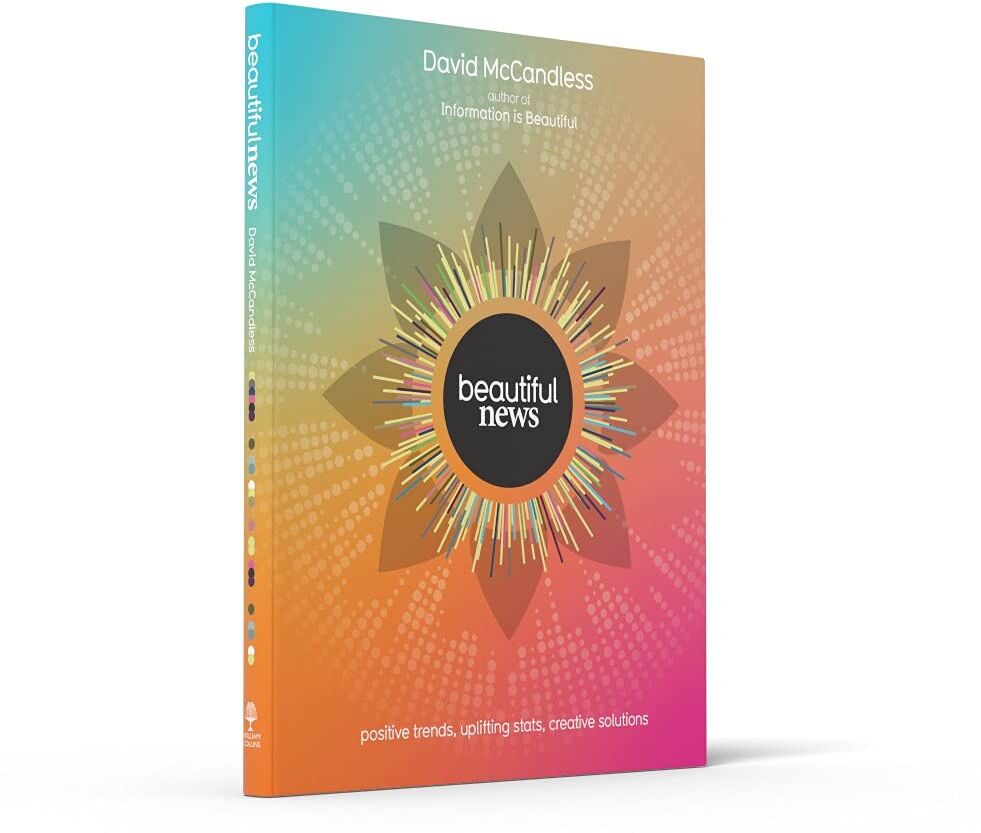
William Collins Beautiful News: Positive Trends, Uplifting Stats, Creative Solutions by David McCandlessIn this fascinating follow-up to the bestselling Information is Beautiful and Knowledge is Beautiful, the king of infographics David McCandless uses spectacular visuals to give us all a bit of good news. We are living in the Information Age, in which we are constantly bombarded with data – on television, in print and online. How can we relate to this mind-numbing overload? Enter David McCandless and his amazing infographics: simple, elegant ways to understand information too complex or abstract to grasp any way but visually. In his unique signature style, he creates dazzling displays that blend facts with their connections, contexts and relationships, making information meaningful, entertaining – and beautiful. In his highly anticipated third book, McCandless illustrates positive news from around the world, for an informative, engaging and uplifting collection of new infographic art.5,99 £*Shipping: 2,99 £Secure redirect to the provider
-
Sceptre Stop Reading the News: A Manifesto for a Happier, Calmer and Wiser Life by Rolf DobelliIn 2013 Rolf Dobelli stood in front of a roomful of journalists and proclaimed that he did not read the news. It caused a riot. Now the author of the bestselling The Art of Thinking Clearly finally sets down his philosophy in detail. And he practises what he preaches: he hasn't read the news for a decade. Stop Reading the News is Dobelli's manifesto about the dangers of the most toxic form of information - news. He shows the damage it does to our concentration and well-being, and how a misplaced sense of duty can misdirect our behaviour. Most importantly, he offers the reader the guidance on how to live without news, and the many potential gains to be had: less disruption, more time, less anxiety, more insights. In a world of increasing disruption and division, Stop Reading the News is a welcome voice of calm and wisdom.4,49 £*Shipping: 1,99 £Secure redirect to the provider



-
What are the differences between trot, harness racing trot, and gallop?
Trot is a two-beat diagonal gait where the horse's legs move in diagonal pairs. Harness racing trot is a specific type of trot where horses pull a two-wheeled cart called a sulky. Gallop is a four-beat gait where all four legs of the horse leave the ground at the same time. The main differences between trot, harness racing trot, and gallop lie in the number of beats, speed, and purpose of each gait. **
-
Should I prepare for the rising trot or the sitting trot?
It is important to prepare for both the rising trot and the sitting trot as they are both essential skills in horseback riding. The rising trot is typically used for longer periods of riding to help both the rider and the horse conserve energy. The sitting trot, on the other hand, is used for more advanced movements and exercises that require a deeper connection and communication between the rider and the horse. By practicing both the rising and sitting trot, you will become a more well-rounded and skilled rider. **
-
How can one practice sitting trot or improve sitting trot on lively horses?
To practice sitting trot or improve sitting trot on lively horses, it is important to focus on developing a strong core and maintaining a deep seat in the saddle. Engaging in exercises such as Pilates or yoga can help improve core strength and stability, which is essential for sitting trot. Additionally, practicing rhythmic breathing and relaxation techniques can help you stay calm and connected with the horse's movement. It is also beneficial to work with a knowledgeable instructor who can provide guidance and feedback on your position and aids while riding the sitting trot on lively horses. **
-
Should one lightly trot over the poles at a trot or completely unload?
When trotting over poles, it is important to maintain a consistent and balanced rhythm. Lightly trotting over the poles allows the horse to maintain its balance and rhythm, while still engaging its muscles. Completely unloading over the poles can disrupt the horse's rhythm and balance, and may lead to a loss of impulsion. Therefore, it is generally better to lightly trot over the poles to maintain the horse's balance and rhythm. **


What is an extended trot?
An extended trot is a movement in dressage where the horse lengthens its stride and covers more ground while maintaining a steady rhythm and balance. The horse's legs reach further forward and backward, creating a more ground-covering and expressive trot. This movement is often seen in dressage tests and showcases the horse's athleticism and ability to move with power and grace. Riders must have good control and balance to execute the extended trot correctly. **
How does the trot work?
The trot is a two-beat diagonal gait where the horse's legs move in diagonal pairs. As the horse moves forward, the front and hind legs on opposite sides move together in a rhythmic pattern. The horse's body moves in an up-and-down motion, with a moment of suspension between each diagonal pair of legs. The rider must learn to follow this motion with their seat and post in rhythm with the horse's movement to maintain balance and harmony. The trot is a versatile gait used in various equestrian disciplines, including dressage, show jumping, and eventing. **
Top-Angebote
Products related to Trot:
-
"SAFAVIEH Tater Trot 32 x 40 Inch Cotton Throw - 2'8"" x 3'4""""Modern cotton throw The Tater Trot Throw is a modern throw. This cotton throw measures 32"" W x 40"" L. Available in 5 colorways: Blue, Green, Grey, Grey / Black and Yellow. Why You’ll Love It Sized for the space: Measures 32"" W x 40"" L."36,80 $*Shipping: 0,00 $Secure redirect to the provider
-
Gel by essie gel-effect nail polish shade 150 haute to trot 13.5 mlessie Gel by essie, 13.5 ml, Nail Varnishes for Women, A gorgeous manicure as though you’d just left the nail salon? The essie Gel by essie nail polish lets you achieve it in the comfort of your own home. It coats the surface of the nail with a continuous layer of long-lasting, intense colour with a glossy finish, helping to give your nails a manicured, perfectly groomed look. You can use it to accentuate your nails or perhaps to enhance your outfit and style. So which colour will you choose to make your nails pop? Characteristics: long-lasting gel manicure effect easy to apply bright, rich colour How to use: Apply the polish using a brush for polish-free, degreased nails. For best results, apply two layers.7,68 £*Shipping: 3,99 £Secure redirect to the provider
-
Ladybird Education Ladybird Readers Roald Dahl Series 7 Books Collection Set (Level 1 - 4) (Twits, James and the Giant Peach, Enormous Crocodile, Esio Trot and More)Ladybird Readers Roald Dahl Series 7 Books Collection Set (Level 1 - 4) (Twits, James and the Giant Peach, Enormous Crocodile, Esio Trot and More) The Twits The Twits, a Level 1 Reader, is Pre-A1 in the CEFR framework and includes practice for the Cambridge English Pre-A1 Starters tests. Short sentences contain a maximum of two clauses, using the present tense and some simple adjectives. James and the Giant Peach James and the Giant Peach, a Level 2 Reader, is A1 in the CEFR framework and includes practice for the Cambridge English A1 Movers tests. Short sentences contain a maximum of two clauses, introducing the past tense and some simple adverbs. Charlie and the Chocolate Factory Charlie and the Chocolate Factory, a Level 3 Reader, is A1+ in the CEFR framework and includes practice for the Cambridge English A1 Movers tests. The Giraffe, the Pelly and Me One day, Billy meets the Giraffe, the Pelican, and the Monkey, who wash windows to buy food. Will Billy help the animals?Ladybird Readers is a graded reading series of traditional tales, popular characters, modern stories, and non-fiction, written for young learners of English as a foreign or second language. The Enormous Crocodile In the jungle lives an enormous crocodile with clever ideas. He wants to eat children. Will the animals in the jungle keep the children safe? Esio Trot Mrs. Silver loves her tortoise, Alfie. Mr. Hoppy loves Mrs. Silver. Will Mr. Hoppy's big idea make him brave enough to tell her? The Magic Finger "I have a Magic Finger. When I get angry . . . things begin to happen!" What will happen when the finger is pointed at the Gregg family? Tags; roald dahl books14,99 £*Shipping: 2,99 £Secure redirect to the provider
-
William Collins Beautiful News: Positive Trends, Uplifting Stats, Creative Solutions by David McCandlessIn this fascinating follow-up to the bestselling Information is Beautiful and Knowledge is Beautiful, the king of infographics David McCandless uses spectacular visuals to give us all a bit of good news. We are living in the Information Age, in which we are constantly bombarded with data – on television, in print and online. How can we relate to this mind-numbing overload? Enter David McCandless and his amazing infographics: simple, elegant ways to understand information too complex or abstract to grasp any way but visually. In his unique signature style, he creates dazzling displays that blend facts with their connections, contexts and relationships, making information meaningful, entertaining – and beautiful. In his highly anticipated third book, McCandless illustrates positive news from around the world, for an informative, engaging and uplifting collection of new infographic art.5,99 £*Shipping: 2,99 £Secure redirect to the provider
-
What discriminatory news articles or headlines have you ever seen?
I have seen news articles and headlines that discriminate against certain racial or ethnic groups, such as using derogatory language or perpetuating negative stereotypes. Additionally, I have come across articles that discriminate against individuals based on their gender, sexual orientation, or socioeconomic status. These articles can perpetuate harmful biases and contribute to the marginalization of certain groups in society. It is important to be critical of the media we consume and to advocate for more inclusive and respectful representation in news coverage. **
-
Should I prepare for sitting trot or rising trot?
Whether you should prepare for sitting trot or rising trot depends on your riding goals and the specific requirements of the discipline you are practicing. Sitting trot requires more core strength and balance, while rising trot can be less physically demanding. If you are preparing for dressage or showing, you may want to focus on perfecting your sitting trot. However, if you are a beginner or focusing on building your overall riding skills, starting with rising trot may be more beneficial. It's important to consult with your instructor to determine the best approach for your individual needs and goals. **
-
What are the differences between trot, harness racing trot, and gallop?
Trot is a two-beat diagonal gait where the horse's legs move in diagonal pairs. Harness racing trot is a specific type of trot where horses pull a two-wheeled cart called a sulky. Gallop is a four-beat gait where all four legs of the horse leave the ground at the same time. The main differences between trot, harness racing trot, and gallop lie in the number of beats, speed, and purpose of each gait. **
-
Should I prepare for the rising trot or the sitting trot?
It is important to prepare for both the rising trot and the sitting trot as they are both essential skills in horseback riding. The rising trot is typically used for longer periods of riding to help both the rider and the horse conserve energy. The sitting trot, on the other hand, is used for more advanced movements and exercises that require a deeper connection and communication between the rider and the horse. By practicing both the rising and sitting trot, you will become a more well-rounded and skilled rider. **
Similar search terms for Trot
-
Sceptre Stop Reading the News: A Manifesto for a Happier, Calmer and Wiser Life by Rolf DobelliIn 2013 Rolf Dobelli stood in front of a roomful of journalists and proclaimed that he did not read the news. It caused a riot. Now the author of the bestselling The Art of Thinking Clearly finally sets down his philosophy in detail. And he practises what he preaches: he hasn't read the news for a decade. Stop Reading the News is Dobelli's manifesto about the dangers of the most toxic form of information - news. He shows the damage it does to our concentration and well-being, and how a misplaced sense of duty can misdirect our behaviour. Most importantly, he offers the reader the guidance on how to live without news, and the many potential gains to be had: less disruption, more time, less anxiety, more insights. In a world of increasing disruption and division, Stop Reading the News is a welcome voice of calm and wisdom.4,49 £*Shipping: 1,99 £Secure redirect to the provider
-
How can one practice sitting trot or improve sitting trot on lively horses?
To practice sitting trot or improve sitting trot on lively horses, it is important to focus on developing a strong core and maintaining a deep seat in the saddle. Engaging in exercises such as Pilates or yoga can help improve core strength and stability, which is essential for sitting trot. Additionally, practicing rhythmic breathing and relaxation techniques can help you stay calm and connected with the horse's movement. It is also beneficial to work with a knowledgeable instructor who can provide guidance and feedback on your position and aids while riding the sitting trot on lively horses. **
-
Should one lightly trot over the poles at a trot or completely unload?
When trotting over poles, it is important to maintain a consistent and balanced rhythm. Lightly trotting over the poles allows the horse to maintain its balance and rhythm, while still engaging its muscles. Completely unloading over the poles can disrupt the horse's rhythm and balance, and may lead to a loss of impulsion. Therefore, it is generally better to lightly trot over the poles to maintain the horse's balance and rhythm. **
-
What is an extended trot?
An extended trot is a movement in dressage where the horse lengthens its stride and covers more ground while maintaining a steady rhythm and balance. The horse's legs reach further forward and backward, creating a more ground-covering and expressive trot. This movement is often seen in dressage tests and showcases the horse's athleticism and ability to move with power and grace. Riders must have good control and balance to execute the extended trot correctly. **
-
How does the trot work?
The trot is a two-beat diagonal gait where the horse's legs move in diagonal pairs. As the horse moves forward, the front and hind legs on opposite sides move together in a rhythmic pattern. The horse's body moves in an up-and-down motion, with a moment of suspension between each diagonal pair of legs. The rider must learn to follow this motion with their seat and post in rhythm with the horse's movement to maintain balance and harmony. The trot is a versatile gait used in various equestrian disciplines, including dressage, show jumping, and eventing. **
* All prices are inclusive of VAT and, if applicable, plus shipping costs. The offer information is based on the details provided by the respective shop and is updated through automated processes. Real-time updates do not occur, so deviations can occur in individual cases. ** Note: Parts of this content were created by AI.