Buy lajmeonline.eu ?
We are moving the project
lajmeonline.eu .
Are you interested in purchasing the domain
lajmeonline.eu ?
domain@kv-gmbh.de · 0541-91531010
Buy lajmeonline.eu ?
What is Marxism-Leninism?
Marxism-Leninism is a political ideology that combines the theories of Karl Marx and Vladimir Lenin. It emphasizes the need for a vanguard party to lead the working class in a revolution to overthrow capitalism and establish a socialist state. Marxism-Leninism also advocates for a centrally planned economy, collective ownership of the means of production, and the eventual transition to a classless, stateless society. It has been a significant influence on communist movements around the world. **
What are Marxism and Leninism?
Marxism is a socio-political theory developed by Karl Marx and Friedrich Engels that focuses on the struggle between the working class (proletariat) and the ruling class (bourgeoisie). It emphasizes the need for a classless society where the means of production are owned collectively. Leninism, on the other hand, is a political theory developed by Vladimir Lenin that builds upon Marxism and focuses on the need for a vanguard party to lead the working class in a revolution to overthrow the capitalist system. Leninism also emphasizes the importance of a strong centralized state to guide the transition to socialism. **

Similar search terms for Leninism
Top-Angebote
Products related to Leninism:
-
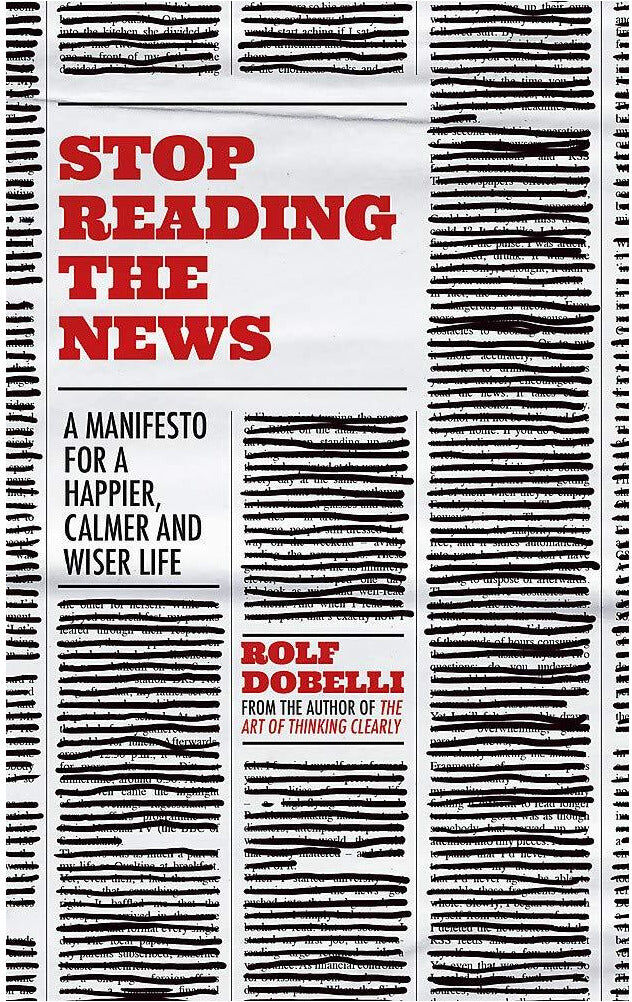
Sceptre Stop Reading the News: A Manifesto for a Happier, Calmer and Wiser Life by Rolf DobelliIn 2013 Rolf Dobelli stood in front of a roomful of journalists and proclaimed that he did not read the news. It caused a riot. Now the author of the bestselling The Art of Thinking Clearly finally sets down his philosophy in detail. And he practises what he preaches: he hasn't read the news for a decade. Stop Reading the News is Dobelli's manifesto about the dangers of the most toxic form of information - news. He shows the damage it does to our concentration and well-being, and how a misplaced sense of duty can misdirect our behaviour. Most importantly, he offers the reader the guidance on how to live without news, and the many potential gains to be had: less disruption, more time, less anxiety, more insights. In a world of increasing disruption and division, Stop Reading the News is a welcome voice of calm and wisdom.4,49 £*Shipping: 1,99 £Secure redirect to the provider
-
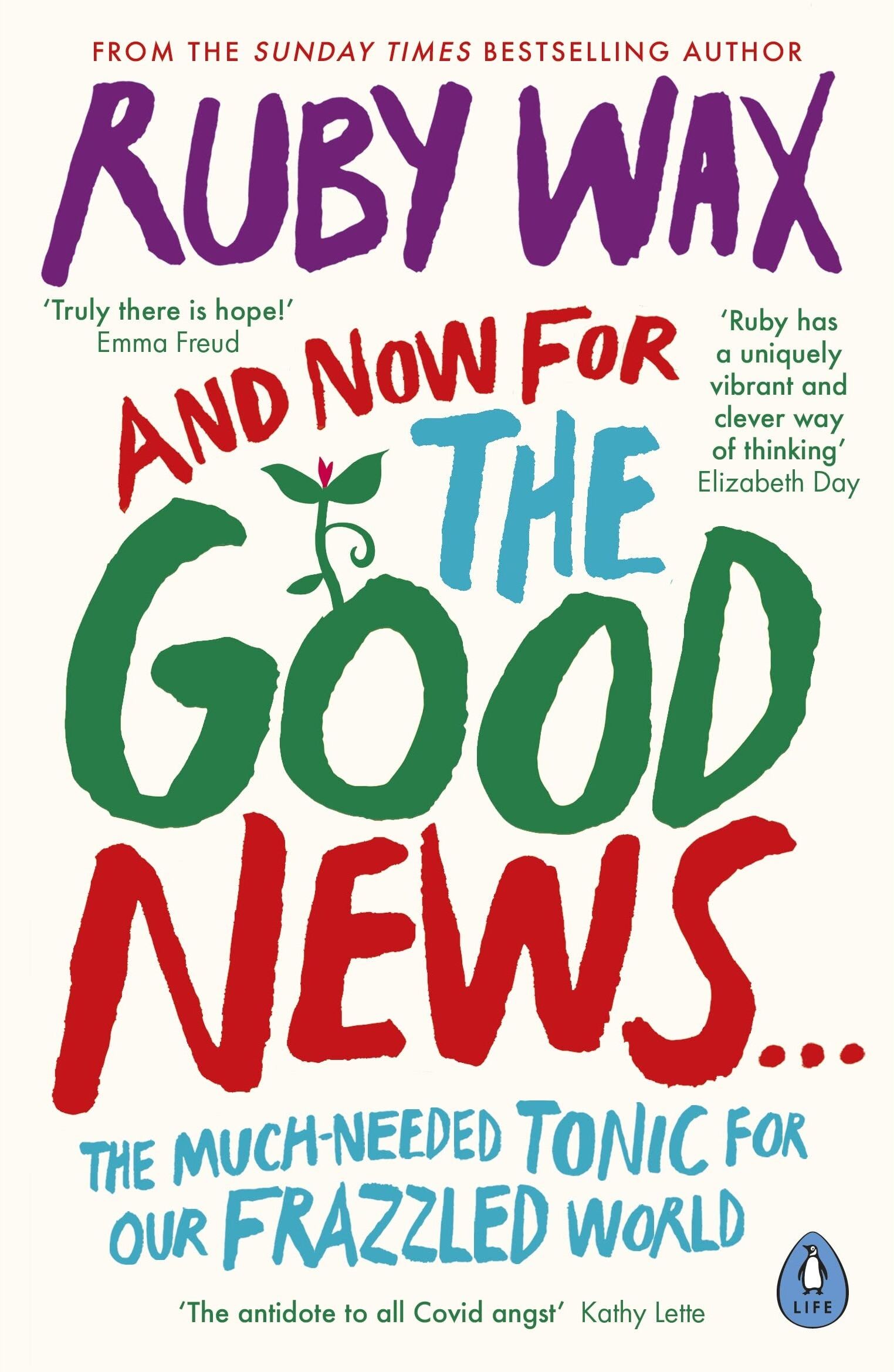
Penguin And Now For The Good News: The much-needed tonic for our frazzled world by Ruby WaxAnd Now For The Good News: The much-needed tonic for our frazzled world by Ruby Wax Bestselling author and comedian, Ruby Wax, uses her iconic wit and expertise to equip readers with a positive roadmap for a kinder, brighter world and better mental health. As we begin to see the green shoots of a post-pandemic world, Ruby Wax's clever and witty And Now for the Good News is the blueprint we all need for achieving a kinder, more compassionate world. Brimming with practical learnings, Ruby gives readers the opportunity to create lasting positive change and provides us all with a much-needed tonic for better mental health and wellbeing. She has spent the last three years speaking to the people who are spearheading the latest innovation and influencing a brighter future for humanity. From the communities being designed to eradicate loneliness and the companies putting their employees' happiness first, to the impressive AI technology teaching children with learning difficulties and taking literacy levels higher than ever before. And Now for the Good News distils her inspiring findings into key practical takeaways for all. Ruby's here to provide us all with a positive roadmap for a brighter world and most importantly, for better mental wellbeing.2,10 £*Shipping: 1,99 £Secure redirect to the provider
-
Picador Patrick Melrose Novels 5 Book Set by Edward St Aubyn – Never Mind, Bad News & Mother’s Milk CollectionNever Mind At his mother's family house in the south of France, Patrick Melrose has the run of a magical garden. Bravely imaginative and self-sufficient, five-year-old Patrick encounters the volatile lives of adults with care. His father, David, rules with considered cruelty, and Eleanor, his mother, has retreated into drink. They are expecting guests for dinner. But this afternoon is unlike the chain of summer days before, and the shocking events that precede the guests' arrival tear Patrick's world in two. Bad News Twenty-two years old and in the grip of a massive addiction, Patrick Melrose is forced to fly to New York to collect his father's ashes. Over the course of a weekend, Patrick's remorseless search for drugs on the avenues of Manhattan, haunted by old acquaintances and insistent inner voices, sends him into a nightmarish spiral. Alone in his room at the Pierce Hotel, he pushes body and mind to the very edge - desperate always to stay one step ahead of his rapidly encroaching past. Some Hope Patrick Melrose, cleaned-up and world-weary, is a reluctant guest at a glittering party deep in the English countryside. Amid a crowd of flitting social dragonflies, he finds his search for redemption and capacity for forgiveness challenged by his observation for the cruelties around him. Armed with his biting wit and a newly fashioned openness, can Patrick, who has been to the furthest limits of experience and back again, find release from the savageries of his childhood? Mother's Milk The once illustrious, once wealthy Melroses are in Peril. Caught up in the wreckage of broken promises, child-rearing, adultery and assisted suicide, Patrick finds his wife Mary consumed by motherhood, his mother in thrall to a New Age foundation, and his young son Robert understanding far more than he should. But even as the family struggles against the pull of its ever-present past, a new generation brings new tenderness, and the possibility of change. At Last As friends, relatives and foes trickle in to pay their final respects to his mother Eleanor, Patrick Melrose finds himself questioning whether a life without parents will be the liberation he has so long imagined. Yet as the memorial service ends and the family gathers one last time, amidst the social niceties and the social horrors, the calms and the rapids, Patrick begins to sense a new current: the chance of some form of safety - at last.9,99 £*Shipping: 2,99 £Secure redirect to the provider


-
What do Marxism, Leninism, and Capitalism mean?
Marxism is a socio-economic theory that focuses on the struggle between the working class (proletariat) and the ruling class (bourgeoisie), advocating for the eventual overthrow of capitalism and the establishment of a classless society. Leninism, on the other hand, is a political theory that builds upon Marxism and emphasizes the need for a vanguard party to lead the proletariat in revolution and establish a socialist state. Capitalism is an economic system based on private ownership of the means of production, where goods and services are produced for profit in a competitive market. **
-
What discriminatory news articles or headlines have you ever seen?
I have seen news articles and headlines that discriminate against certain racial or ethnic groups, such as using derogatory language or perpetuating negative stereotypes. Additionally, I have come across articles that discriminate against individuals based on their gender, sexual orientation, or socioeconomic status. These articles can perpetuate harmful biases and contribute to the marginalization of certain groups in society. It is important to be critical of the media we consume and to advocate for more inclusive and respectful representation in news coverage. **
-
What is the difference between Marxism and Marxism-Leninism?
Marxism is a political and economic theory developed by Karl Marx, focusing on the struggle between the working class and the ruling class. Marxism-Leninism, on the other hand, is a political ideology developed by Vladimir Lenin that builds upon Marxist theory and incorporates Lenin's ideas on imperialism, the vanguard party, and the role of the state in the transition to socialism. Marxism-Leninism is often associated with the Soviet Union and other communist states that followed Lenin's interpretation of Marxism. **
-
What is the difference between Stalinism, Maoism, and Leninism?
Stalinism, Maoism, and Leninism are all ideologies that emerged from the broader framework of Marxism-Leninism, but they have distinct characteristics. Leninism refers to the political and economic theories developed by Vladimir Lenin, focusing on the vanguard role of the Communist Party and the need for a revolution to establish a socialist state. Stalinism, on the other hand, refers to the policies and practices implemented by Joseph Stalin, characterized by a strong centralized state, forced industrialization, and collectivization of agriculture. Maoism, named after Mao Zedong, emphasizes the role of peasants in revolution and the need for continuous class struggle, as well as the importance of self-reliance and rural-based revolution. While all three ideologies share some commonalities, such as the goal of establishing a socialist society, they differ in their specific emphasis and implementation of Marxist principles. **


What is the difference between National Bolshevism and Marxism-Leninism?
National Bolshevism and Marxism-Leninism are two distinct political ideologies with key differences. National Bolshevism combines elements of far-right nationalism with elements of far-left Bolshevism, advocating for a strong centralized state and a planned economy, while also promoting national identity and cultural preservation. On the other hand, Marxism-Leninism is a communist ideology that emphasizes the need for a classless society, the dictatorship of the proletariat, and the eventual withering away of the state. While both ideologies may share some similarities in their critique of capitalism and support for state control, their approaches to nationalism, cultural identity, and the role of the state in society are fundamentally different. **
What is the difference between Stalinism, Leninism, Marxism, Trotskyism, and Maoism?
Stalinism is a political ideology associated with Joseph Stalin, characterized by centralized control, authoritarianism, and a focus on rapid industrialization. Leninism refers to the political theory and practice developed by Vladimir Lenin, emphasizing the need for a vanguard party to lead the proletariat in a socialist revolution. Marxism is the original socialist ideology developed by Karl Marx and Friedrich Engels, focusing on the class struggle and the eventual establishment of a classless society. Trotskyism is a branch of Marxism associated with Leon Trotsky, emphasizing the need for international revolution and opposition to Stalinism. Maoism is a variant of Marxism-Leninism developed by Mao Zedong, emphasizing the role of peasants in revolution and the importance of continuous class struggle. **
Top-Angebote
Products related to Leninism:
-
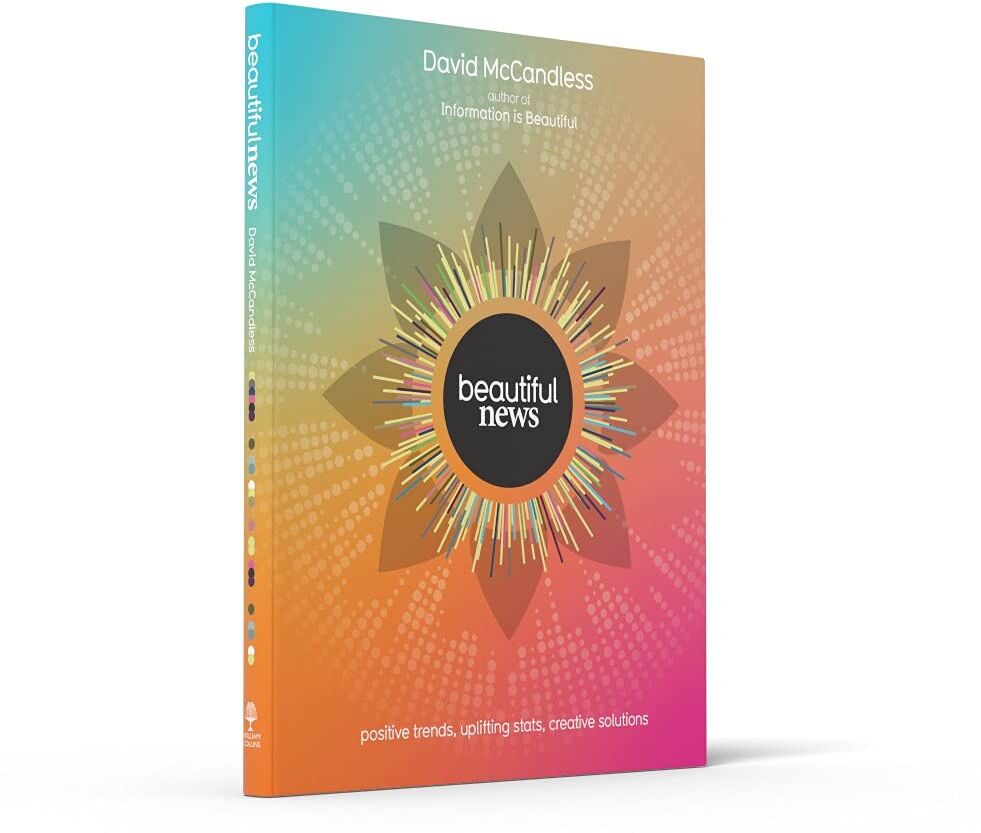
William Collins Beautiful News: Positive Trends, Uplifting Stats, Creative Solutions by David McCandlessIn this fascinating follow-up to the bestselling Information is Beautiful and Knowledge is Beautiful, the king of infographics David McCandless uses spectacular visuals to give us all a bit of good news. We are living in the Information Age, in which we are constantly bombarded with data – on television, in print and online. How can we relate to this mind-numbing overload? Enter David McCandless and his amazing infographics: simple, elegant ways to understand information too complex or abstract to grasp any way but visually. In his unique signature style, he creates dazzling displays that blend facts with their connections, contexts and relationships, making information meaningful, entertaining – and beautiful. In his highly anticipated third book, McCandless illustrates positive news from around the world, for an informative, engaging and uplifting collection of new infographic art.5,99 £*Shipping: 2,99 £Secure redirect to the provider
-
Fake News Party Card Game by Topi Games for 2-8 Players, Ages 16+Fake News is a quick-fire party card game that combines imagination, bluffing, and a straight face to create the most ridiculous story. Designed for 2–8 players aged 16 and over, it offers a lively session of around 15 minutes. Players take turns inventing absurd news stories, exaggerating the details, and trying to persuade everyone at the table that their tale deserves attention. The more creative and convincing the story, the better the chance of collecting likes and becoming the standout storyteller. With its humor-led premise and short playing time, Fake News is well suited to game nights, parties, and gatherings where players are ready to improvise. There's no need for serious reporting here; the stranger the headline, the more entertaining the result can be.12,99 £*Shipping: 1,99 £Secure redirect to the provider
-
Sceptre Stop Reading the News: A Manifesto for a Happier, Calmer and Wiser Life by Rolf DobelliIn 2013 Rolf Dobelli stood in front of a roomful of journalists and proclaimed that he did not read the news. It caused a riot. Now the author of the bestselling The Art of Thinking Clearly finally sets down his philosophy in detail. And he practises what he preaches: he hasn't read the news for a decade. Stop Reading the News is Dobelli's manifesto about the dangers of the most toxic form of information - news. He shows the damage it does to our concentration and well-being, and how a misplaced sense of duty can misdirect our behaviour. Most importantly, he offers the reader the guidance on how to live without news, and the many potential gains to be had: less disruption, more time, less anxiety, more insights. In a world of increasing disruption and division, Stop Reading the News is a welcome voice of calm and wisdom.4,49 £*Shipping: 1,99 £Secure redirect to the provider
-
What is Marxism-Leninism?
Marxism-Leninism is a political ideology that combines the theories of Karl Marx and Vladimir Lenin. It emphasizes the need for a vanguard party to lead the working class in a revolution to overthrow capitalism and establish a socialist state. Marxism-Leninism also advocates for a centrally planned economy, collective ownership of the means of production, and the eventual transition to a classless, stateless society. It has been a significant influence on communist movements around the world. **
-
What are Marxism and Leninism?
Marxism is a socio-political theory developed by Karl Marx and Friedrich Engels that focuses on the struggle between the working class (proletariat) and the ruling class (bourgeoisie). It emphasizes the need for a classless society where the means of production are owned collectively. Leninism, on the other hand, is a political theory developed by Vladimir Lenin that builds upon Marxism and focuses on the need for a vanguard party to lead the working class in a revolution to overthrow the capitalist system. Leninism also emphasizes the importance of a strong centralized state to guide the transition to socialism. **
-
What do Marxism, Leninism, and Capitalism mean?
Marxism is a socio-economic theory that focuses on the struggle between the working class (proletariat) and the ruling class (bourgeoisie), advocating for the eventual overthrow of capitalism and the establishment of a classless society. Leninism, on the other hand, is a political theory that builds upon Marxism and emphasizes the need for a vanguard party to lead the proletariat in revolution and establish a socialist state. Capitalism is an economic system based on private ownership of the means of production, where goods and services are produced for profit in a competitive market. **
-
What discriminatory news articles or headlines have you ever seen?
I have seen news articles and headlines that discriminate against certain racial or ethnic groups, such as using derogatory language or perpetuating negative stereotypes. Additionally, I have come across articles that discriminate against individuals based on their gender, sexual orientation, or socioeconomic status. These articles can perpetuate harmful biases and contribute to the marginalization of certain groups in society. It is important to be critical of the media we consume and to advocate for more inclusive and respectful representation in news coverage. **
Similar search terms for Leninism
-
Penguin And Now For The Good News: The much-needed tonic for our frazzled world by Ruby WaxAnd Now For The Good News: The much-needed tonic for our frazzled world by Ruby Wax Bestselling author and comedian, Ruby Wax, uses her iconic wit and expertise to equip readers with a positive roadmap for a kinder, brighter world and better mental health. As we begin to see the green shoots of a post-pandemic world, Ruby Wax's clever and witty And Now for the Good News is the blueprint we all need for achieving a kinder, more compassionate world. Brimming with practical learnings, Ruby gives readers the opportunity to create lasting positive change and provides us all with a much-needed tonic for better mental health and wellbeing. She has spent the last three years speaking to the people who are spearheading the latest innovation and influencing a brighter future for humanity. From the communities being designed to eradicate loneliness and the companies putting their employees' happiness first, to the impressive AI technology teaching children with learning difficulties and taking literacy levels higher than ever before. And Now for the Good News distils her inspiring findings into key practical takeaways for all. Ruby's here to provide us all with a positive roadmap for a brighter world and most importantly, for better mental wellbeing.2,10 £*Shipping: 1,99 £Secure redirect to the provider
-
Picador Patrick Melrose Novels 5 Book Set by Edward St Aubyn – Never Mind, Bad News & Mother’s Milk CollectionNever Mind At his mother's family house in the south of France, Patrick Melrose has the run of a magical garden. Bravely imaginative and self-sufficient, five-year-old Patrick encounters the volatile lives of adults with care. His father, David, rules with considered cruelty, and Eleanor, his mother, has retreated into drink. They are expecting guests for dinner. But this afternoon is unlike the chain of summer days before, and the shocking events that precede the guests' arrival tear Patrick's world in two. Bad News Twenty-two years old and in the grip of a massive addiction, Patrick Melrose is forced to fly to New York to collect his father's ashes. Over the course of a weekend, Patrick's remorseless search for drugs on the avenues of Manhattan, haunted by old acquaintances and insistent inner voices, sends him into a nightmarish spiral. Alone in his room at the Pierce Hotel, he pushes body and mind to the very edge - desperate always to stay one step ahead of his rapidly encroaching past. Some Hope Patrick Melrose, cleaned-up and world-weary, is a reluctant guest at a glittering party deep in the English countryside. Amid a crowd of flitting social dragonflies, he finds his search for redemption and capacity for forgiveness challenged by his observation for the cruelties around him. Armed with his biting wit and a newly fashioned openness, can Patrick, who has been to the furthest limits of experience and back again, find release from the savageries of his childhood? Mother's Milk The once illustrious, once wealthy Melroses are in Peril. Caught up in the wreckage of broken promises, child-rearing, adultery and assisted suicide, Patrick finds his wife Mary consumed by motherhood, his mother in thrall to a New Age foundation, and his young son Robert understanding far more than he should. But even as the family struggles against the pull of its ever-present past, a new generation brings new tenderness, and the possibility of change. At Last As friends, relatives and foes trickle in to pay their final respects to his mother Eleanor, Patrick Melrose finds himself questioning whether a life without parents will be the liberation he has so long imagined. Yet as the memorial service ends and the family gathers one last time, amidst the social niceties and the social horrors, the calms and the rapids, Patrick begins to sense a new current: the chance of some form of safety - at last.9,99 £*Shipping: 2,99 £Secure redirect to the provider
-
What is the difference between Marxism and Marxism-Leninism?
Marxism is a political and economic theory developed by Karl Marx, focusing on the struggle between the working class and the ruling class. Marxism-Leninism, on the other hand, is a political ideology developed by Vladimir Lenin that builds upon Marxist theory and incorporates Lenin's ideas on imperialism, the vanguard party, and the role of the state in the transition to socialism. Marxism-Leninism is often associated with the Soviet Union and other communist states that followed Lenin's interpretation of Marxism. **
-
What is the difference between Stalinism, Maoism, and Leninism?
Stalinism, Maoism, and Leninism are all ideologies that emerged from the broader framework of Marxism-Leninism, but they have distinct characteristics. Leninism refers to the political and economic theories developed by Vladimir Lenin, focusing on the vanguard role of the Communist Party and the need for a revolution to establish a socialist state. Stalinism, on the other hand, refers to the policies and practices implemented by Joseph Stalin, characterized by a strong centralized state, forced industrialization, and collectivization of agriculture. Maoism, named after Mao Zedong, emphasizes the role of peasants in revolution and the need for continuous class struggle, as well as the importance of self-reliance and rural-based revolution. While all three ideologies share some commonalities, such as the goal of establishing a socialist society, they differ in their specific emphasis and implementation of Marxist principles. **
-
What is the difference between National Bolshevism and Marxism-Leninism?
National Bolshevism and Marxism-Leninism are two distinct political ideologies with key differences. National Bolshevism combines elements of far-right nationalism with elements of far-left Bolshevism, advocating for a strong centralized state and a planned economy, while also promoting national identity and cultural preservation. On the other hand, Marxism-Leninism is a communist ideology that emphasizes the need for a classless society, the dictatorship of the proletariat, and the eventual withering away of the state. While both ideologies may share some similarities in their critique of capitalism and support for state control, their approaches to nationalism, cultural identity, and the role of the state in society are fundamentally different. **
-
What is the difference between Stalinism, Leninism, Marxism, Trotskyism, and Maoism?
Stalinism is a political ideology associated with Joseph Stalin, characterized by centralized control, authoritarianism, and a focus on rapid industrialization. Leninism refers to the political theory and practice developed by Vladimir Lenin, emphasizing the need for a vanguard party to lead the proletariat in a socialist revolution. Marxism is the original socialist ideology developed by Karl Marx and Friedrich Engels, focusing on the class struggle and the eventual establishment of a classless society. Trotskyism is a branch of Marxism associated with Leon Trotsky, emphasizing the need for international revolution and opposition to Stalinism. Maoism is a variant of Marxism-Leninism developed by Mao Zedong, emphasizing the role of peasants in revolution and the importance of continuous class struggle. **
* All prices are inclusive of VAT and, if applicable, plus shipping costs. The offer information is based on the details provided by the respective shop and is updated through automated processes. Real-time updates do not occur, so deviations can occur in individual cases. ** Note: Parts of this content were created by AI.