Buy lajmeonline.eu ?
We are moving the project
lajmeonline.eu .
Are you interested in purchasing the domain
lajmeonline.eu ?
domain@kv-gmbh.de · 0541-91531010
Buy lajmeonline.eu ?
What discriminatory news articles or headlines have you ever seen?
I have seen news articles and headlines that discriminate against certain racial or ethnic groups, such as using derogatory language or perpetuating negative stereotypes. Additionally, I have come across articles that discriminate against individuals based on their gender, sexual orientation, or socioeconomic status. These articles can perpetuate harmful biases and contribute to the marginalization of certain groups in society. It is important to be critical of the media we consume and to advocate for more inclusive and respectful representation in news coverage. **
How do I write a characterization if I have no external features?
If you have no external features to work with, you can focus on developing your character through their internal thoughts, feelings, and actions. Consider their personality, motivations, fears, and desires, and use these elements to create a well-rounded and complex character. You can also explore their relationships with other characters and how they interact with their environment to further develop their characterization. By delving into their internal world and how they navigate the world around them, you can create a compelling and memorable character without relying on external features. **

Similar search terms for Characterization
Top-Angebote
Products related to Characterization:
-
Picador Patrick Melrose Novels 5 Book Set by Edward St Aubyn – Never Mind, Bad News & Mother’s Milk CollectionNever Mind At his mother's family house in the south of France, Patrick Melrose has the run of a magical garden. Bravely imaginative and self-sufficient, five-year-old Patrick encounters the volatile lives of adults with care. His father, David, rules with considered cruelty, and Eleanor, his mother, has retreated into drink. They are expecting guests for dinner. But this afternoon is unlike the chain of summer days before, and the shocking events that precede the guests' arrival tear Patrick's world in two. Bad News Twenty-two years old and in the grip of a massive addiction, Patrick Melrose is forced to fly to New York to collect his father's ashes. Over the course of a weekend, Patrick's remorseless search for drugs on the avenues of Manhattan, haunted by old acquaintances and insistent inner voices, sends him into a nightmarish spiral. Alone in his room at the Pierce Hotel, he pushes body and mind to the very edge - desperate always to stay one step ahead of his rapidly encroaching past. Some Hope Patrick Melrose, cleaned-up and world-weary, is a reluctant guest at a glittering party deep in the English countryside. Amid a crowd of flitting social dragonflies, he finds his search for redemption and capacity for forgiveness challenged by his observation for the cruelties around him. Armed with his biting wit and a newly fashioned openness, can Patrick, who has been to the furthest limits of experience and back again, find release from the savageries of his childhood? Mother's Milk The once illustrious, once wealthy Melroses are in Peril. Caught up in the wreckage of broken promises, child-rearing, adultery and assisted suicide, Patrick finds his wife Mary consumed by motherhood, his mother in thrall to a New Age foundation, and his young son Robert understanding far more than he should. But even as the family struggles against the pull of its ever-present past, a new generation brings new tenderness, and the possibility of change. At Last As friends, relatives and foes trickle in to pay their final respects to his mother Eleanor, Patrick Melrose finds himself questioning whether a life without parents will be the liberation he has so long imagined. Yet as the memorial service ends and the family gathers one last time, amidst the social niceties and the social horrors, the calms and the rapids, Patrick begins to sense a new current: the chance of some form of safety - at last.9,99 £*Shipping: 2,99 £Secure redirect to the provider
-
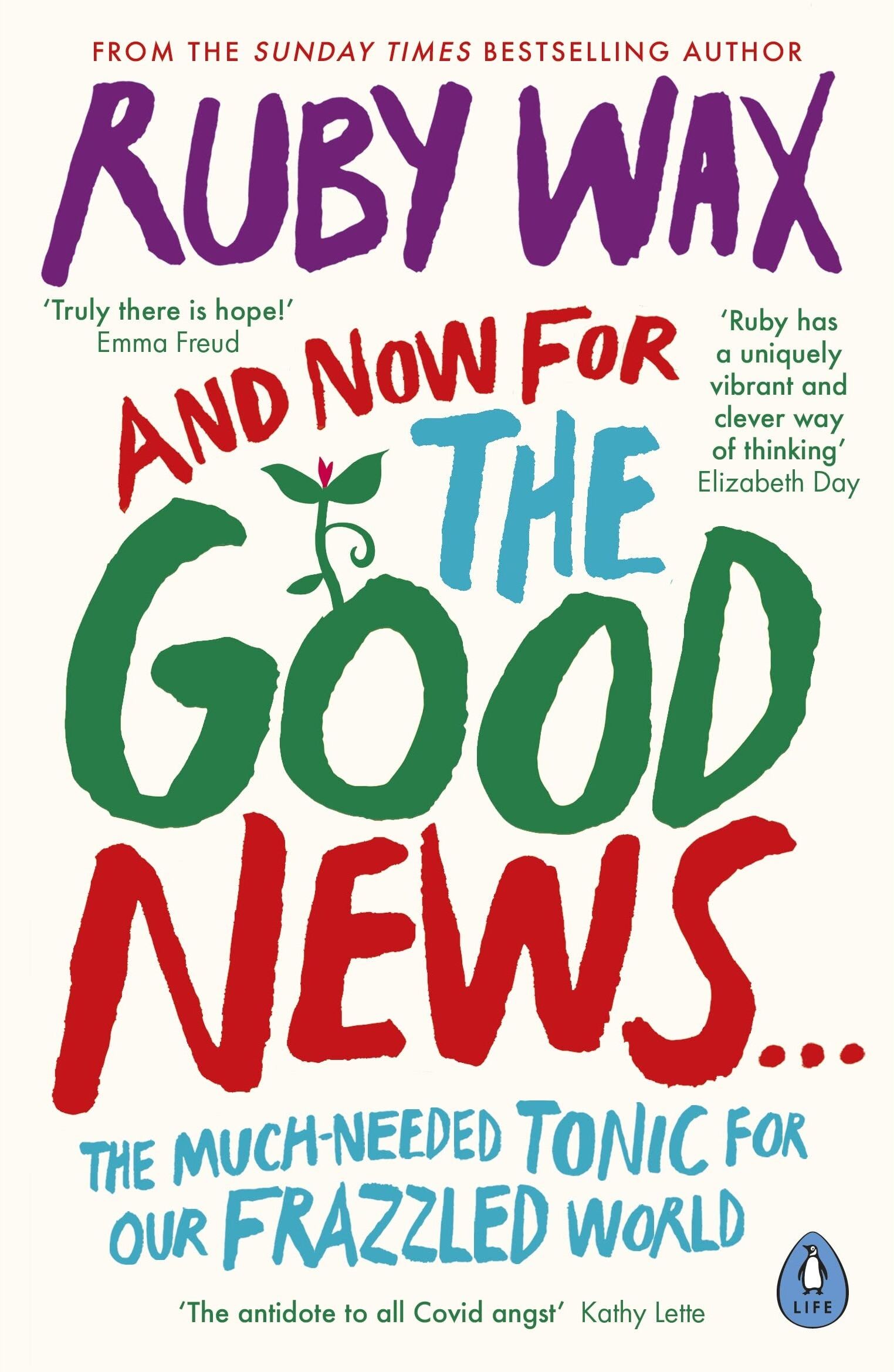
Penguin And Now For The Good News: The much-needed tonic for our frazzled world by Ruby WaxAnd Now For The Good News: The much-needed tonic for our frazzled world by Ruby Wax Bestselling author and comedian, Ruby Wax, uses her iconic wit and expertise to equip readers with a positive roadmap for a kinder, brighter world and better mental health. As we begin to see the green shoots of a post-pandemic world, Ruby Wax's clever and witty And Now for the Good News is the blueprint we all need for achieving a kinder, more compassionate world. Brimming with practical learnings, Ruby gives readers the opportunity to create lasting positive change and provides us all with a much-needed tonic for better mental health and wellbeing. She has spent the last three years speaking to the people who are spearheading the latest innovation and influencing a brighter future for humanity. From the communities being designed to eradicate loneliness and the companies putting their employees' happiness first, to the impressive AI technology teaching children with learning difficulties and taking literacy levels higher than ever before. And Now for the Good News distils her inspiring findings into key practical takeaways for all. Ruby's here to provide us all with a positive roadmap for a brighter world and most importantly, for better mental wellbeing.2,10 £*Shipping: 1,99 £Secure redirect to the provider
-
Vornado Velocity HD Garage Space Heater with Advanced Safety FeaturesINCREASED PERFORMANCE – The Velocity HD heater features Velocity Tuned Heat technology, delivering hotter heat with superior efficiency. Its advanced aerodynamics push air further and faster, increasing warmth all around you.94,99 $*Shipping: 0,00 $Secure redirect to the provider



-
What is indirect characterization?
Indirect characterization is the process of revealing a character's traits through their actions, thoughts, dialogue, appearance, and how other characters react to them, rather than directly stating their personality traits. It allows readers to infer and interpret a character's qualities based on the information provided by the author. This method of characterization adds depth and complexity to characters, making them more realistic and engaging for the audience. **
-
Is the characterization good?
Yes, the characterization in the story is well-developed and effective. The author provides detailed descriptions and insights into the characters' personalities, motivations, and relationships, allowing readers to connect with and understand them on a deeper level. Each character feels unique and multi-dimensional, with their own strengths, flaws, and growth throughout the story. Overall, the characterization enhances the storytelling and adds depth to the narrative. **
-
What is the exact difference between a literary characterization and a characterization?
A literary characterization refers to the portrayal of a character in a work of literature, where the author uses various techniques to develop the character's traits, personality, and motivations. On the other hand, characterization is a broader term that encompasses the depiction of characters in any form of storytelling, including literature, film, theater, and more. While literary characterization focuses specifically on how characters are developed within the context of a written work, characterization can refer to the portrayal of characters in any medium or genre. **
-
What goes into a characterization?
Characterization involves the development and portrayal of a character's personality, traits, motivations, beliefs, and behaviors. This includes both the physical description of the character as well as their inner thoughts and emotions. Characterization also involves how a character interacts with other characters and the world around them, as well as how they change and grow throughout the story. Effective characterization helps readers understand and connect with the characters in a story. **


Is this French characterization correct?
Yes, the French characterization is generally correct. French culture is often associated with sophistication, elegance, and a strong emphasis on art, fashion, and cuisine. The French are also known for their love of literature, philosophy, and intellectual pursuits. Additionally, French people are often seen as proud of their language and heritage, and can sometimes come across as reserved or formal in social interactions. **
How is a characterization structured?
Characterization is structured through the use of direct and indirect methods. Direct characterization involves the author explicitly stating a character's traits, while indirect characterization reveals a character's traits through their actions, thoughts, and dialogue. Additionally, characterization can be developed through a character's relationships with other characters and their role within the story. Overall, characterization is structured through a combination of explicit and implicit methods to create a well-rounded and believable character. **
Top-Angebote
Products related to Characterization:
-
William Collins Beautiful News: Positive Trends, Uplifting Stats, Creative Solutions by David McCandlessIn this fascinating follow-up to the bestselling Information is Beautiful and Knowledge is Beautiful, the king of infographics David McCandless uses spectacular visuals to give us all a bit of good news. We are living in the Information Age, in which we are constantly bombarded with data – on television, in print and online. How can we relate to this mind-numbing overload? Enter David McCandless and his amazing infographics: simple, elegant ways to understand information too complex or abstract to grasp any way but visually. In his unique signature style, he creates dazzling displays that blend facts with their connections, contexts and relationships, making information meaningful, entertaining – and beautiful. In his highly anticipated third book, McCandless illustrates positive news from around the world, for an informative, engaging and uplifting collection of new infographic art.5,99 £*Shipping: 2,99 £Secure redirect to the provider
-
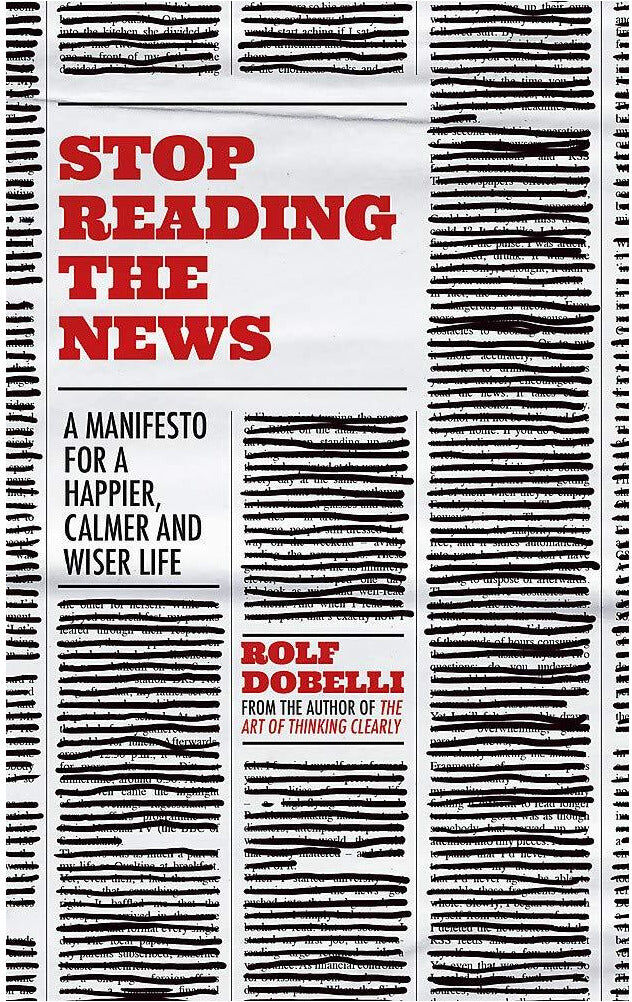
Sceptre Stop Reading the News: A Manifesto for a Happier, Calmer and Wiser Life by Rolf DobelliIn 2013 Rolf Dobelli stood in front of a roomful of journalists and proclaimed that he did not read the news. It caused a riot. Now the author of the bestselling The Art of Thinking Clearly finally sets down his philosophy in detail. And he practises what he preaches: he hasn't read the news for a decade. Stop Reading the News is Dobelli's manifesto about the dangers of the most toxic form of information - news. He shows the damage it does to our concentration and well-being, and how a misplaced sense of duty can misdirect our behaviour. Most importantly, he offers the reader the guidance on how to live without news, and the many potential gains to be had: less disruption, more time, less anxiety, more insights. In a world of increasing disruption and division, Stop Reading the News is a welcome voice of calm and wisdom.4,49 £*Shipping: 1,99 £Secure redirect to the provider
-
Picador Patrick Melrose Novels 5 Book Set by Edward St Aubyn – Never Mind, Bad News & Mother’s Milk CollectionNever Mind At his mother's family house in the south of France, Patrick Melrose has the run of a magical garden. Bravely imaginative and self-sufficient, five-year-old Patrick encounters the volatile lives of adults with care. His father, David, rules with considered cruelty, and Eleanor, his mother, has retreated into drink. They are expecting guests for dinner. But this afternoon is unlike the chain of summer days before, and the shocking events that precede the guests' arrival tear Patrick's world in two. Bad News Twenty-two years old and in the grip of a massive addiction, Patrick Melrose is forced to fly to New York to collect his father's ashes. Over the course of a weekend, Patrick's remorseless search for drugs on the avenues of Manhattan, haunted by old acquaintances and insistent inner voices, sends him into a nightmarish spiral. Alone in his room at the Pierce Hotel, he pushes body and mind to the very edge - desperate always to stay one step ahead of his rapidly encroaching past. Some Hope Patrick Melrose, cleaned-up and world-weary, is a reluctant guest at a glittering party deep in the English countryside. Amid a crowd of flitting social dragonflies, he finds his search for redemption and capacity for forgiveness challenged by his observation for the cruelties around him. Armed with his biting wit and a newly fashioned openness, can Patrick, who has been to the furthest limits of experience and back again, find release from the savageries of his childhood? Mother's Milk The once illustrious, once wealthy Melroses are in Peril. Caught up in the wreckage of broken promises, child-rearing, adultery and assisted suicide, Patrick finds his wife Mary consumed by motherhood, his mother in thrall to a New Age foundation, and his young son Robert understanding far more than he should. But even as the family struggles against the pull of its ever-present past, a new generation brings new tenderness, and the possibility of change. At Last As friends, relatives and foes trickle in to pay their final respects to his mother Eleanor, Patrick Melrose finds himself questioning whether a life without parents will be the liberation he has so long imagined. Yet as the memorial service ends and the family gathers one last time, amidst the social niceties and the social horrors, the calms and the rapids, Patrick begins to sense a new current: the chance of some form of safety - at last.9,99 £*Shipping: 2,99 £Secure redirect to the provider
-
What discriminatory news articles or headlines have you ever seen?
I have seen news articles and headlines that discriminate against certain racial or ethnic groups, such as using derogatory language or perpetuating negative stereotypes. Additionally, I have come across articles that discriminate against individuals based on their gender, sexual orientation, or socioeconomic status. These articles can perpetuate harmful biases and contribute to the marginalization of certain groups in society. It is important to be critical of the media we consume and to advocate for more inclusive and respectful representation in news coverage. **
-
How do I write a characterization if I have no external features?
If you have no external features to work with, you can focus on developing your character through their internal thoughts, feelings, and actions. Consider their personality, motivations, fears, and desires, and use these elements to create a well-rounded and complex character. You can also explore their relationships with other characters and how they interact with their environment to further develop their characterization. By delving into their internal world and how they navigate the world around them, you can create a compelling and memorable character without relying on external features. **
-
What is indirect characterization?
Indirect characterization is the process of revealing a character's traits through their actions, thoughts, dialogue, appearance, and how other characters react to them, rather than directly stating their personality traits. It allows readers to infer and interpret a character's qualities based on the information provided by the author. This method of characterization adds depth and complexity to characters, making them more realistic and engaging for the audience. **
-
Is the characterization good?
Yes, the characterization in the story is well-developed and effective. The author provides detailed descriptions and insights into the characters' personalities, motivations, and relationships, allowing readers to connect with and understand them on a deeper level. Each character feels unique and multi-dimensional, with their own strengths, flaws, and growth throughout the story. Overall, the characterization enhances the storytelling and adds depth to the narrative. **
Similar search terms for Characterization
-
Penguin And Now For The Good News: The much-needed tonic for our frazzled world by Ruby WaxAnd Now For The Good News: The much-needed tonic for our frazzled world by Ruby Wax Bestselling author and comedian, Ruby Wax, uses her iconic wit and expertise to equip readers with a positive roadmap for a kinder, brighter world and better mental health. As we begin to see the green shoots of a post-pandemic world, Ruby Wax's clever and witty And Now for the Good News is the blueprint we all need for achieving a kinder, more compassionate world. Brimming with practical learnings, Ruby gives readers the opportunity to create lasting positive change and provides us all with a much-needed tonic for better mental health and wellbeing. She has spent the last three years speaking to the people who are spearheading the latest innovation and influencing a brighter future for humanity. From the communities being designed to eradicate loneliness and the companies putting their employees' happiness first, to the impressive AI technology teaching children with learning difficulties and taking literacy levels higher than ever before. And Now for the Good News distils her inspiring findings into key practical takeaways for all. Ruby's here to provide us all with a positive roadmap for a brighter world and most importantly, for better mental wellbeing.2,10 £*Shipping: 1,99 £Secure redirect to the provider
-
Vornado Velocity HD Garage Space Heater with Advanced Safety FeaturesINCREASED PERFORMANCE – The Velocity HD heater features Velocity Tuned Heat technology, delivering hotter heat with superior efficiency. Its advanced aerodynamics push air further and faster, increasing warmth all around you.94,99 $*Shipping: 0,00 $Secure redirect to the provider
-
What is the exact difference between a literary characterization and a characterization?
A literary characterization refers to the portrayal of a character in a work of literature, where the author uses various techniques to develop the character's traits, personality, and motivations. On the other hand, characterization is a broader term that encompasses the depiction of characters in any form of storytelling, including literature, film, theater, and more. While literary characterization focuses specifically on how characters are developed within the context of a written work, characterization can refer to the portrayal of characters in any medium or genre. **
-
What goes into a characterization?
Characterization involves the development and portrayal of a character's personality, traits, motivations, beliefs, and behaviors. This includes both the physical description of the character as well as their inner thoughts and emotions. Characterization also involves how a character interacts with other characters and the world around them, as well as how they change and grow throughout the story. Effective characterization helps readers understand and connect with the characters in a story. **
-
Is this French characterization correct?
Yes, the French characterization is generally correct. French culture is often associated with sophistication, elegance, and a strong emphasis on art, fashion, and cuisine. The French are also known for their love of literature, philosophy, and intellectual pursuits. Additionally, French people are often seen as proud of their language and heritage, and can sometimes come across as reserved or formal in social interactions. **
-
How is a characterization structured?
Characterization is structured through the use of direct and indirect methods. Direct characterization involves the author explicitly stating a character's traits, while indirect characterization reveals a character's traits through their actions, thoughts, and dialogue. Additionally, characterization can be developed through a character's relationships with other characters and their role within the story. Overall, characterization is structured through a combination of explicit and implicit methods to create a well-rounded and believable character. **
* All prices are inclusive of VAT and, if applicable, plus shipping costs. The offer information is based on the details provided by the respective shop and is updated through automated processes. Real-time updates do not occur, so deviations can occur in individual cases. ** Note: Parts of this content were created by AI.