Buy lajmeonline.eu ?
We are moving the project
lajmeonline.eu .
Are you interested in purchasing the domain
lajmeonline.eu ?
domain@kv-gmbh.de · 0541-91531010
Buy lajmeonline.eu ?
What discriminatory news articles or headlines have you ever seen?
I have seen news articles and headlines that discriminate against certain racial or ethnic groups, such as using derogatory language or perpetuating negative stereotypes. Additionally, I have come across articles that discriminate against individuals based on their gender, sexual orientation, or socioeconomic status. These articles can perpetuate harmful biases and contribute to the marginalization of certain groups in society. It is important to be critical of the media we consume and to advocate for more inclusive and respectful representation in news coverage. **
'Astronomy scientist'
An astronomy scientist is a professional who studies celestial objects and phenomena in the universe. They use telescopes, satellites, and other instruments to observe and analyze stars, planets, galaxies, and other cosmic bodies. Astronomy scientists also conduct research to understand the origins, evolution, and behavior of these celestial objects, as well as the fundamental laws of physics that govern the universe. Their work contributes to our understanding of the cosmos and helps to advance scientific knowledge and technology. **


Similar search terms for Astronomy
Top-Angebote
Products related to Astronomy:
-
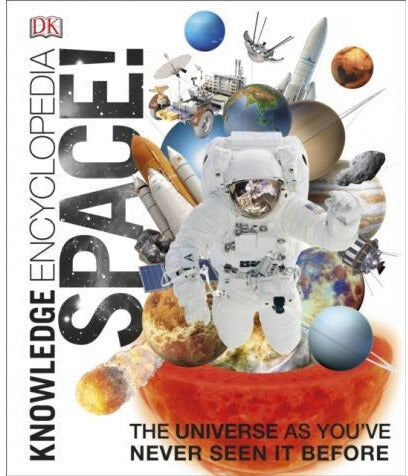
Dorling Kindersley DK Knowledge Encyclopedia Space The Ultimate Space & Astronomy Reference Guide for Kids and Families - Planets, Stars, Galaxies & the Universe ExplainExplore the wonders of the universe with the DK Knowledge Encyclopedia Space, an inspiring and visually stunning guide to outer space.Packed with high-definition photographs, 3D illustrations, infographics, facts, timelines, and scientific explanations, this encyclopedia takes readers on an unforgettable journey from Earth to the farthest reaches of the cosmos. Perfect for curious readers, young astronomers, and space enthusiasts, this book explains: The solar system, planets, moons, and dwarf planets Stars, nebulas, black holes, galaxies & cosmic phenomena Space exploration, astronauts & spacecraft The Big Bang, universe evolution & future missions The latest science discoveries explained in kid-friendly language A brilliant educational book for STEM learners, classrooms, home libraries, and children aged 8–14 who love space.9,99 £*Shipping: 2,99 £Secure redirect to the provider
-
Arcturus Children's Encyclopedia of Space by Giles Sparrow Visual Guide to the Universe, Planets, Stars & Solar System Astronomy Reference Book for KidsJourney beyond Earth and discover the wonders of the cosmos with Children's Encyclopedia of Space: A Visual Guide to the Universe by Giles Sparrow. Part of the Arcturus Children's Reference Library, this engaging visual encyclopedia introduces young readers to the fascinating world of space, astronomy and the universe. Explore the Solar System, planets, moons, stars, galaxies and other extraordinary objects in space while developing an understanding of the vast universe beyond our planet. Presented as an accessible visual reference guide, the book makes complex astronomical topics engaging and easier for young readers to explore. Ideal for children fascinated by planets, stars, space exploration and astronomy, this encyclopedia encourages curiosity and provides a useful resource for independent reading, homework, school projects and general knowledge. Whether learning about our neighbouring planets or exploring the mysteries of distant stars and galaxies, Children's Encyclopedia of Space is a valuable addition to any young space enthusiast's bookshelf. Key Features Engaging children's space encyclopedia Written by astronomy author Giles Sparrow A visual guide to the universe and outer space Explores planets, stars, moons, galaxies and the Solar System Introduces astronomy in an accessible format for young readers Ideal for school projects, homework and independent learning Part of the Arcturus Children's Reference Library Excellent educational gift for young space and science enthusiasts5,99 £*Shipping: 2,99 £Secure redirect to the provider
-
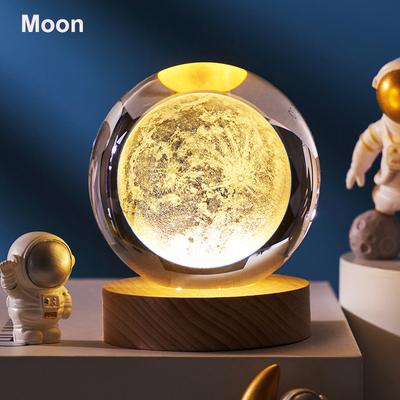
Evergreen Home Goods Astronomy Solar System Crystal Ball, LED Light Up Globe With Planets, Moon, And Astronaut For Home Desk Decor moonGaze into the heart of a miniature universe with our breathtaking Solar System Crystal Ball. This isn't just a decoration; it's a captivating portal to the stars, designed to ignite your imagination and bring the profound beauty of the cosmos right...29,97 $*Shipping: 0,00 $Secure redirect to the provider
-
Fox Eye Publishing Children Introduction To Science For Beginners (Series 1) 10 Hardback Book collection Set: (Astronomy, Electricity, Food Chains, Forces And Motion, ..Children Introduction To Science For Beginners (Series 1) – 10 Hardback Book Collection Set The Introduction to Science Series 1 is a comprehensive 10-book hardback collection designed to open the door to the wonders of scientific discovery. Each volume introduces a key area of science in a simple, engaging way, helping readers explore fascinating questions about the world around us — and beyond. This set includes: Introduction to Astronomy: How do people study the stars, planets, and other objects in space? Find out the answer to this question and many more inside. Introduction to Electricity: What is electricity and how do we use it? Discover the amazing power of electricity inside. Introduction to Living in Space: What is it like to live in space? Where do you sleep, what do you eat, and how do you work? Find out inside. Introduction to Food Chains: What are food chains and why do we need them? Explore the amazing world of food chains inside. Introduction to Forces and Motion: What are forces and how do we use them? Learn about the fascinating world of forces inside. Introduction to Heat: What is heat and how do we use it? Discover the incredible power of heat inside. Introduction to Storms: What causes Earth’s fiercest storms? Find the answers to these questions and more inside. Introduction to Sun, Moon and Stars: How are stars created and how did we land on the Moon? Explore the wonders of our universe inside. Introduction to Volcanoes: Volcanoes can cause terrible destruction but can also be incredibly useful. Find out more inside. Introduction to Natural Resources: What are natural resources and why do we need them? Discover our amazing world of natural resources inside. Each book in this series makes science accessible and exciting, encouraging curiosity, exploration, and a deeper understanding of the natural world and the universe.9,99 £*Shipping: 2,99 £Secure redirect to the provider


-
'Astrophysics or Astronomy?'
Astrophysics and astronomy are closely related fields, but they have distinct focuses. Astronomy is the study of celestial objects and phenomena in the universe, while astrophysics involves applying the principles of physics to understand the behavior and properties of these objects. Astrophysics delves deeper into the physical processes that govern the universe, such as the study of gravity, electromagnetism, and nuclear reactions. Both fields are essential for advancing our understanding of the cosmos, with astronomy providing observational data and astrophysics providing theoretical explanations. **
-
What is astronomy?
Astronomy is the scientific study of celestial objects such as stars, planets, galaxies, and other phenomena that exist beyond Earth's atmosphere. It involves observing, analyzing, and understanding the universe and its various components. Astronomers use telescopes and other instruments to gather data and make discoveries about the origins, evolution, and behavior of objects in space. Astronomy also plays a crucial role in helping us understand our place in the universe and how it all came to be. **
-
What does astronomy research?
Astronomy research involves studying celestial objects such as stars, planets, galaxies, and other phenomena in the universe. Researchers use telescopes, satellites, and other instruments to observe and analyze these objects to better understand their properties, behavior, and evolution. By studying astronomy, researchers aim to answer fundamental questions about the origins of the universe, the nature of dark matter and dark energy, and the potential for life beyond Earth. **
-
Is astronomy a science?
Yes, astronomy is considered a science. It is the study of celestial objects such as stars, planets, galaxies, and the universe as a whole. Astronomers use the scientific method to make observations, form hypotheses, and test their theories. Through the use of mathematics, physics, and technology, astronomers are able to gather data and make predictions about the behavior and properties of objects in space. **
Which leaves concern astronomy?
In astronomy, leaves from trees do not have a direct impact. However, the leaves of certain plants, such as the ginkgo tree, have been studied for their ability to preserve delicate fossils. These leaves can provide valuable information about ancient ecosystems and the conditions in which the fossils were formed. Additionally, leaves can be used as a natural filter to observe the sun during solar eclipses, as they create natural pinhole cameras that project the image of the partially eclipsed sun onto the ground. **
What is Astronomy 12?
Astronomy 12 is a high school level course that delves into the study of celestial objects and phenomena. It covers topics such as the solar system, stars, galaxies, and the universe as a whole. Students learn about the history of astronomy, the tools and techniques used in astronomical research, and the latest discoveries in the field. The course may also include hands-on activities such as observing the night sky and using telescopes. Overall, Astronomy 12 provides students with a comprehensive understanding of the universe and our place within it. **
Top-Angebote
Products related to Astronomy:
-
Collins 2024 Guide to the Night Sky Book – Astronomy & Stargazing CollectionFrom the UK’s Number One Astronomy publisher, this is the bestselling stargazing handbook to the planets, stars and constellations visible from the northern hemisphere. With 6 pages for each month covering January–December 2024. This practical guide is an easy introduction to astronomy and a useful reference for seasoned stargazers. Designed for Britain and Ireland but usable anywhere in the world between 40°N and 60°N, covering most of Europe, southern Canada and the northern United States. Advice on where to start looking and a map of dark sky sites to avoid light pollution. Charts for the circumpolar and seasonal constellations. Easy-to-use star charts for each month with descriptions of objects and events to look for in 2024. Positions of the moon, visible planets and eclipses. Includes a section on comets and a detailed map of the moon. Now in three editions: Britain and Ireland; North America; Southern Hemisphere. Written and illustrated by astronomical experts, Storm Dunlop and Wil Tirion, and approved by the astronomers of the Royal Observatory Greenwich.1,99 £*Shipping: 1,99 £Secure redirect to the provider
-
Collins Beginner's Guides of Astronomy 4 Books Collection Box Set (Stargazing, Moongazing, Northern Lights and Observing our Solar System)Beginner's Guides of Astronomy 4 Books Collection Box Set (Stargazing, Moongazing, Northern Lights & Observing our Solar System): Stargazing: A brilliant introductory guide to exploring the night sky, from the astronomers of the Royal Observatory Greenwich.Offering complete advice from the ground up, Stargazing is the perfect manual for beginners to astronomy – introducing the world of telescopes, planets, stars, dark skies and celestial maps.Discover how to tackle light pollution, how to stargaze with just your eyes, and what equipment is best for beginners. Moongazing: An in-depth guide for aspiring astronomers and Moon observers from the Royal Observatory Greenwich. Includes detailed Moon maps and covers the history of lunar observation and exploration, the properties of the Moon, its origin and orbit. This is the ideal book for Moon observers covering essential equipment, and the key events to look out for.Detailed advice is given on how to choose a telescope and how to capture the Moon in sketches. Northern Lights: The perfect gift for anyone with a desire to see the Northern Lights.Discover the incomparable beauty of the Northern Lights with this accessible guide for aspiring astronomers and seasoned night sky observers. Covers the essential equipment needed for observation and photography and full of stunning photographs. Observing our Solar System: In this guide, you will learn how the Solar System came to be understood – from ancient theories of its mechanics to the modern age of remote sensing, We'll then look at the significant targets for amateur astronomers – the Moon, Sun and planets – to see how they can be explored by eye and with telescopes.12,85 £*Shipping: 2,99 £Secure redirect to the provider
-
Dorling Kindersley DK Knowledge Encyclopedia Space The Ultimate Space & Astronomy Reference Guide for Kids and Families - Planets, Stars, Galaxies & the Universe ExplainExplore the wonders of the universe with the DK Knowledge Encyclopedia Space, an inspiring and visually stunning guide to outer space.Packed with high-definition photographs, 3D illustrations, infographics, facts, timelines, and scientific explanations, this encyclopedia takes readers on an unforgettable journey from Earth to the farthest reaches of the cosmos. Perfect for curious readers, young astronomers, and space enthusiasts, this book explains: The solar system, planets, moons, and dwarf planets Stars, nebulas, black holes, galaxies & cosmic phenomena Space exploration, astronauts & spacecraft The Big Bang, universe evolution & future missions The latest science discoveries explained in kid-friendly language A brilliant educational book for STEM learners, classrooms, home libraries, and children aged 8–14 who love space.9,99 £*Shipping: 2,99 £Secure redirect to the provider
-
Arcturus Children's Encyclopedia of Space by Giles Sparrow Visual Guide to the Universe, Planets, Stars & Solar System Astronomy Reference Book for KidsJourney beyond Earth and discover the wonders of the cosmos with Children's Encyclopedia of Space: A Visual Guide to the Universe by Giles Sparrow. Part of the Arcturus Children's Reference Library, this engaging visual encyclopedia introduces young readers to the fascinating world of space, astronomy and the universe. Explore the Solar System, planets, moons, stars, galaxies and other extraordinary objects in space while developing an understanding of the vast universe beyond our planet. Presented as an accessible visual reference guide, the book makes complex astronomical topics engaging and easier for young readers to explore. Ideal for children fascinated by planets, stars, space exploration and astronomy, this encyclopedia encourages curiosity and provides a useful resource for independent reading, homework, school projects and general knowledge. Whether learning about our neighbouring planets or exploring the mysteries of distant stars and galaxies, Children's Encyclopedia of Space is a valuable addition to any young space enthusiast's bookshelf. Key Features Engaging children's space encyclopedia Written by astronomy author Giles Sparrow A visual guide to the universe and outer space Explores planets, stars, moons, galaxies and the Solar System Introduces astronomy in an accessible format for young readers Ideal for school projects, homework and independent learning Part of the Arcturus Children's Reference Library Excellent educational gift for young space and science enthusiasts5,99 £*Shipping: 2,99 £Secure redirect to the provider
-
What discriminatory news articles or headlines have you ever seen?
I have seen news articles and headlines that discriminate against certain racial or ethnic groups, such as using derogatory language or perpetuating negative stereotypes. Additionally, I have come across articles that discriminate against individuals based on their gender, sexual orientation, or socioeconomic status. These articles can perpetuate harmful biases and contribute to the marginalization of certain groups in society. It is important to be critical of the media we consume and to advocate for more inclusive and respectful representation in news coverage. **
-
'Astronomy scientist'
An astronomy scientist is a professional who studies celestial objects and phenomena in the universe. They use telescopes, satellites, and other instruments to observe and analyze stars, planets, galaxies, and other cosmic bodies. Astronomy scientists also conduct research to understand the origins, evolution, and behavior of these celestial objects, as well as the fundamental laws of physics that govern the universe. Their work contributes to our understanding of the cosmos and helps to advance scientific knowledge and technology. **
-
'Astrophysics or Astronomy?'
Astrophysics and astronomy are closely related fields, but they have distinct focuses. Astronomy is the study of celestial objects and phenomena in the universe, while astrophysics involves applying the principles of physics to understand the behavior and properties of these objects. Astrophysics delves deeper into the physical processes that govern the universe, such as the study of gravity, electromagnetism, and nuclear reactions. Both fields are essential for advancing our understanding of the cosmos, with astronomy providing observational data and astrophysics providing theoretical explanations. **
-
What is astronomy?
Astronomy is the scientific study of celestial objects such as stars, planets, galaxies, and other phenomena that exist beyond Earth's atmosphere. It involves observing, analyzing, and understanding the universe and its various components. Astronomers use telescopes and other instruments to gather data and make discoveries about the origins, evolution, and behavior of objects in space. Astronomy also plays a crucial role in helping us understand our place in the universe and how it all came to be. **
Similar search terms for Astronomy
-
Evergreen Home Goods Astronomy Solar System Crystal Ball, LED Light Up Globe With Planets, Moon, And Astronaut For Home Desk Decor moonGaze into the heart of a miniature universe with our breathtaking Solar System Crystal Ball. This isn't just a decoration; it's a captivating portal to the stars, designed to ignite your imagination and bring the profound beauty of the cosmos right...29,97 $*Shipping: 0,00 $Secure redirect to the provider
-
Fox Eye Publishing Children Introduction To Science For Beginners (Series 1) 10 Hardback Book collection Set: (Astronomy, Electricity, Food Chains, Forces And Motion, ..Children Introduction To Science For Beginners (Series 1) – 10 Hardback Book Collection Set The Introduction to Science Series 1 is a comprehensive 10-book hardback collection designed to open the door to the wonders of scientific discovery. Each volume introduces a key area of science in a simple, engaging way, helping readers explore fascinating questions about the world around us — and beyond. This set includes: Introduction to Astronomy: How do people study the stars, planets, and other objects in space? Find out the answer to this question and many more inside. Introduction to Electricity: What is electricity and how do we use it? Discover the amazing power of electricity inside. Introduction to Living in Space: What is it like to live in space? Where do you sleep, what do you eat, and how do you work? Find out inside. Introduction to Food Chains: What are food chains and why do we need them? Explore the amazing world of food chains inside. Introduction to Forces and Motion: What are forces and how do we use them? Learn about the fascinating world of forces inside. Introduction to Heat: What is heat and how do we use it? Discover the incredible power of heat inside. Introduction to Storms: What causes Earth’s fiercest storms? Find the answers to these questions and more inside. Introduction to Sun, Moon and Stars: How are stars created and how did we land on the Moon? Explore the wonders of our universe inside. Introduction to Volcanoes: Volcanoes can cause terrible destruction but can also be incredibly useful. Find out more inside. Introduction to Natural Resources: What are natural resources and why do we need them? Discover our amazing world of natural resources inside. Each book in this series makes science accessible and exciting, encouraging curiosity, exploration, and a deeper understanding of the natural world and the universe.9,99 £*Shipping: 2,99 £Secure redirect to the provider
-
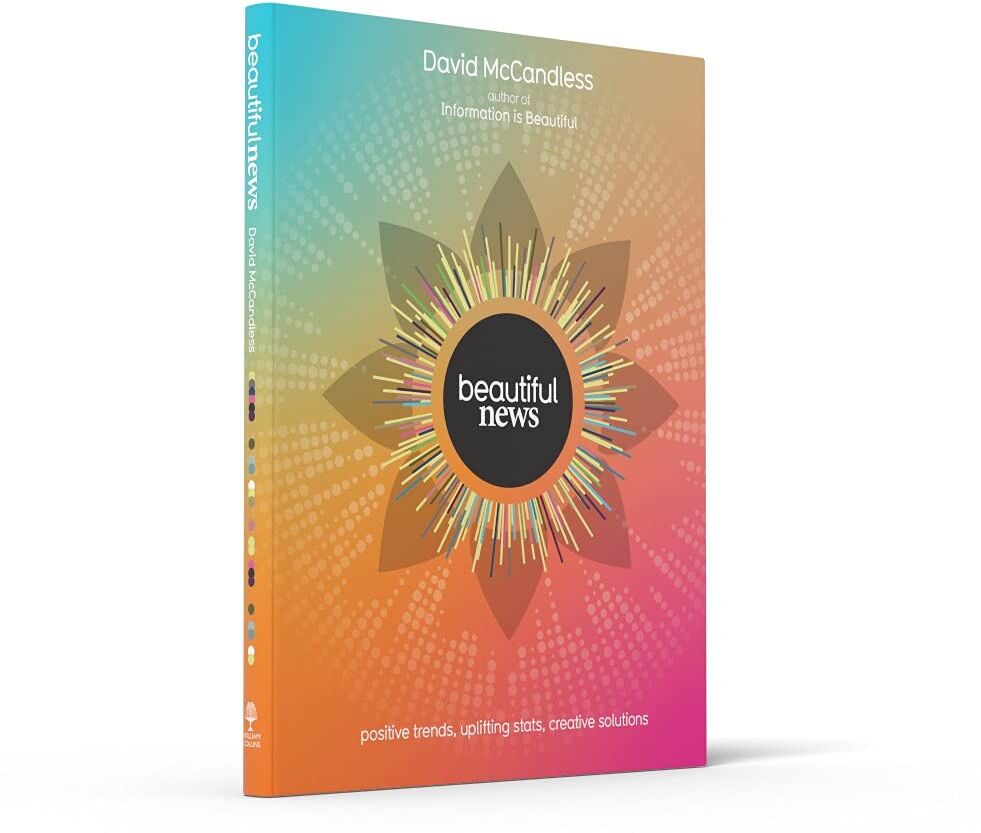
William Collins Beautiful News: Positive Trends, Uplifting Stats, Creative Solutions by David McCandlessIn this fascinating follow-up to the bestselling Information is Beautiful and Knowledge is Beautiful, the king of infographics David McCandless uses spectacular visuals to give us all a bit of good news. We are living in the Information Age, in which we are constantly bombarded with data – on television, in print and online. How can we relate to this mind-numbing overload? Enter David McCandless and his amazing infographics: simple, elegant ways to understand information too complex or abstract to grasp any way but visually. In his unique signature style, he creates dazzling displays that blend facts with their connections, contexts and relationships, making information meaningful, entertaining – and beautiful. In his highly anticipated third book, McCandless illustrates positive news from around the world, for an informative, engaging and uplifting collection of new infographic art.5,99 £*Shipping: 2,99 £Secure redirect to the provider
-
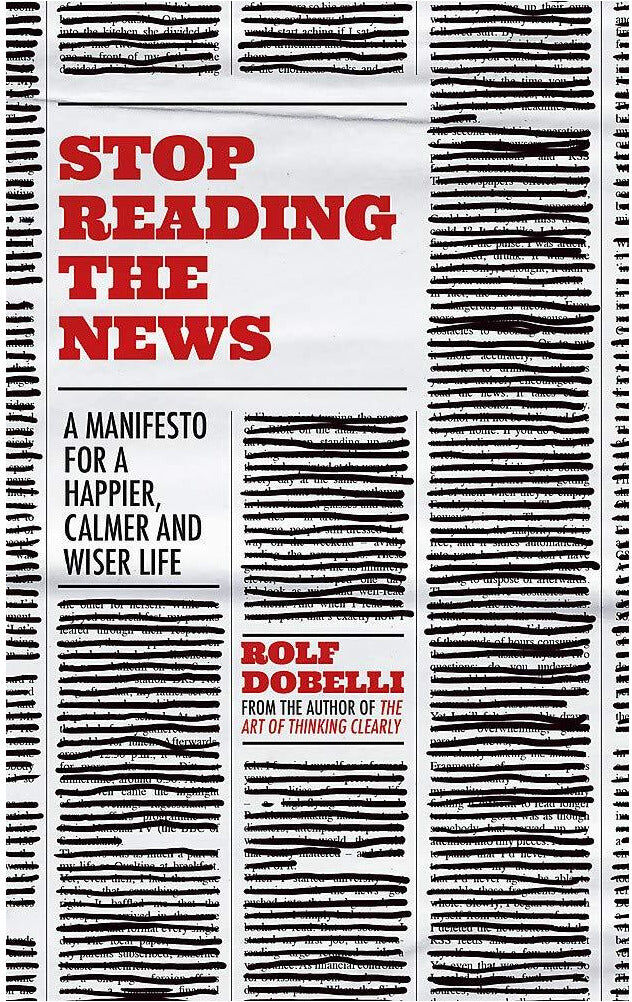
Sceptre Stop Reading the News: A Manifesto for a Happier, Calmer and Wiser Life by Rolf DobelliIn 2013 Rolf Dobelli stood in front of a roomful of journalists and proclaimed that he did not read the news. It caused a riot. Now the author of the bestselling The Art of Thinking Clearly finally sets down his philosophy in detail. And he practises what he preaches: he hasn't read the news for a decade. Stop Reading the News is Dobelli's manifesto about the dangers of the most toxic form of information - news. He shows the damage it does to our concentration and well-being, and how a misplaced sense of duty can misdirect our behaviour. Most importantly, he offers the reader the guidance on how to live without news, and the many potential gains to be had: less disruption, more time, less anxiety, more insights. In a world of increasing disruption and division, Stop Reading the News is a welcome voice of calm and wisdom.4,49 £*Shipping: 1,99 £Secure redirect to the provider
-
What does astronomy research?
Astronomy research involves studying celestial objects such as stars, planets, galaxies, and other phenomena in the universe. Researchers use telescopes, satellites, and other instruments to observe and analyze these objects to better understand their properties, behavior, and evolution. By studying astronomy, researchers aim to answer fundamental questions about the origins of the universe, the nature of dark matter and dark energy, and the potential for life beyond Earth. **
-
Is astronomy a science?
Yes, astronomy is considered a science. It is the study of celestial objects such as stars, planets, galaxies, and the universe as a whole. Astronomers use the scientific method to make observations, form hypotheses, and test their theories. Through the use of mathematics, physics, and technology, astronomers are able to gather data and make predictions about the behavior and properties of objects in space. **
-
Which leaves concern astronomy?
In astronomy, leaves from trees do not have a direct impact. However, the leaves of certain plants, such as the ginkgo tree, have been studied for their ability to preserve delicate fossils. These leaves can provide valuable information about ancient ecosystems and the conditions in which the fossils were formed. Additionally, leaves can be used as a natural filter to observe the sun during solar eclipses, as they create natural pinhole cameras that project the image of the partially eclipsed sun onto the ground. **
-
What is Astronomy 12?
Astronomy 12 is a high school level course that delves into the study of celestial objects and phenomena. It covers topics such as the solar system, stars, galaxies, and the universe as a whole. Students learn about the history of astronomy, the tools and techniques used in astronomical research, and the latest discoveries in the field. The course may also include hands-on activities such as observing the night sky and using telescopes. Overall, Astronomy 12 provides students with a comprehensive understanding of the universe and our place within it. **
* All prices are inclusive of VAT and, if applicable, plus shipping costs. The offer information is based on the details provided by the respective shop and is updated through automated processes. Real-time updates do not occur, so deviations can occur in individual cases. ** Note: Parts of this content were created by AI.